The first signs of football being played in South Africa among native South Africans “precisely followed the assertion of British commercial and imperial power”(Alegi, African Soccerscapes). Understanding how British Colonialism in South Africa, and it’s relation to football is imperative in understanding the importance of football in modern day South Africa.

The British Empire were the first to introduce football to South Africa when they first conquered the landmass that is now considered South Africa. During this time period, the first recorded instances of football being played in South Africa was done by British soldiers. This excluded any and all South Africans. The first noted instances of South Africans occurred in Cape Town South Africa, as Cape town was a major port of trade at the time, making it a hotbed for increases in the playing of football. (Alegi, African Soccerscapes).
As the British Empire began to strengthen their stranglehold on South Africa, one of the things that they came to realize was that they could use football as a means to impress upon native South Africans a more Westernized view of the world(Alegi, South Africa and the Global Game). Through the implementation of football programs in privatized British schools based in South Africa, football became a tool that the British could use for their own benefit. This is best seen in the Natal region of South Africa, at two British schools in the towns of Durban and Pietermaritzburg (Alegi, Soccerscapes).
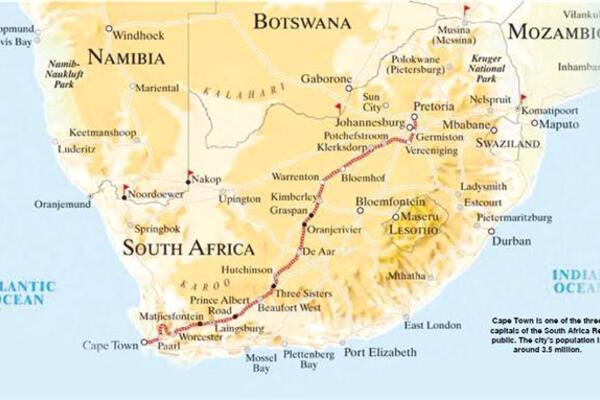
As you can see above, one both Durban and Pietermaritzburg are extremely close to one another. Because of this geographical proximity, the two towns developed a fierce rivalry.
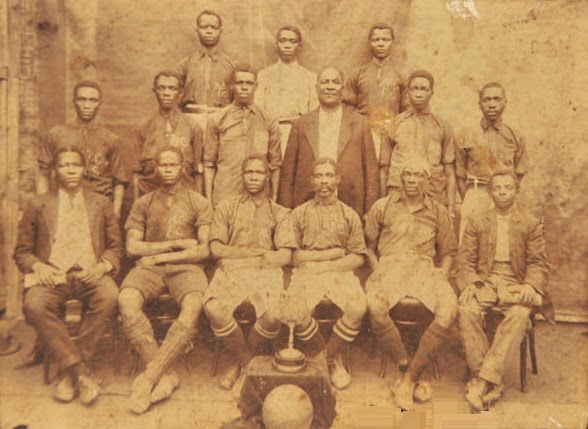
Pictured above is the Durban and District Football association at a time when black South Africans were allowed to play in the club.
In 1916, the first Natal African football organization, the Durban and District Football Association was founded. This was the first soccer club created by South Africans. From there football clubs had a steady growth over time in the number of clubs, and total number of South Africans participating in the game of football. Between World War 1 and 2, British colonists and white South Africans would draft black South Africans onto there teams, forcing them to play, not by choice. Over time however, football, which was originally seen as another form of work by native South Africans, began to change.
As South Africans began to play more, they began to not see the game as work, but as a source of enjoyment. A sense of patriotism for the town from which they came from developed (Alegi,Soccerscapes). What once was work, soon became something much more important. Through their own unique celebrations and playing styles, a distinctly South African football culture began to emerge.

 Football in South Africa